Contents
A photo of a broken product is one of the most common pieces of evidence a business is asked to trust. It comes with a refund request, an insurance claim or a warranty case, and someone has to decide whether the damage is real.
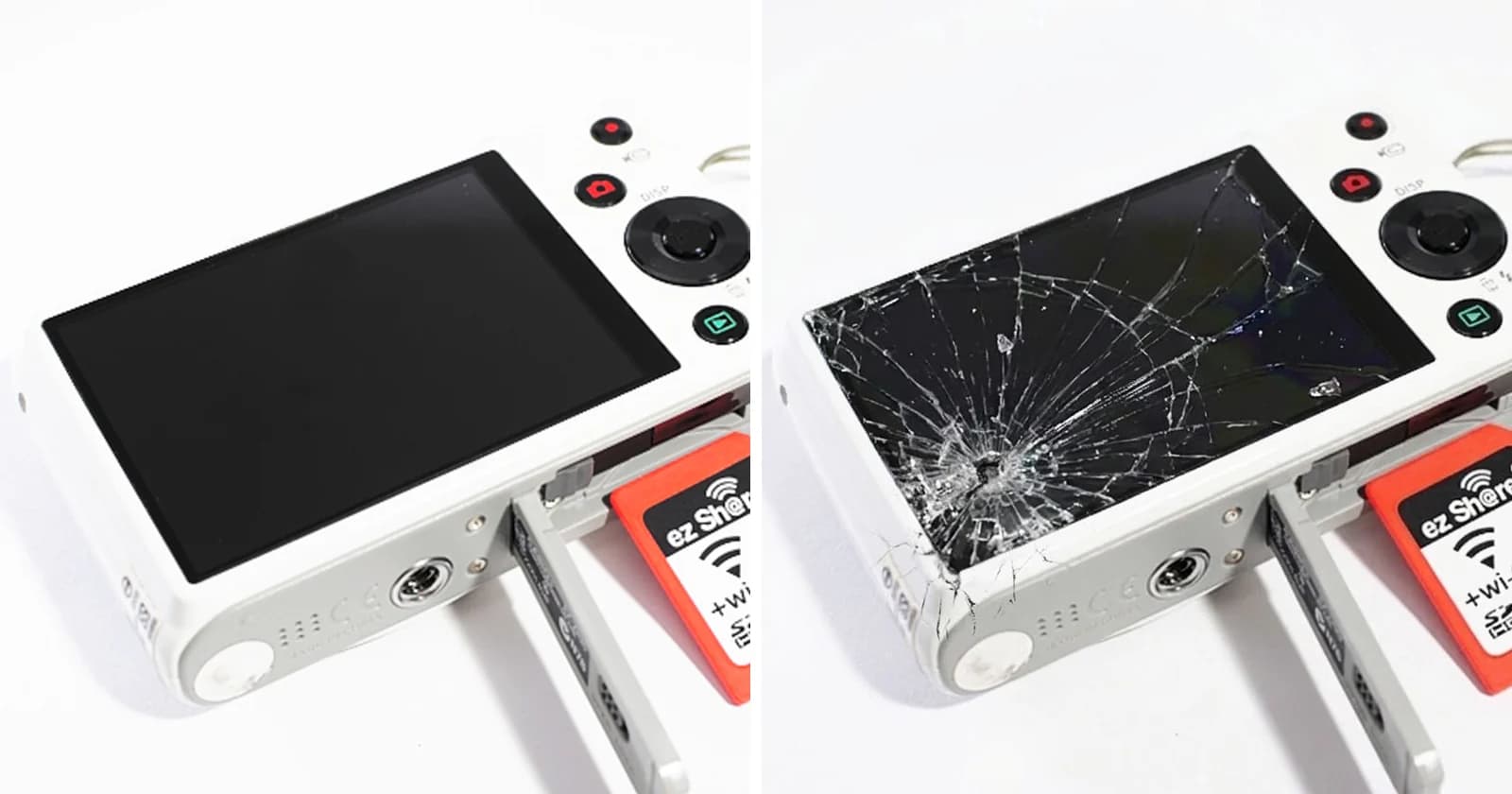
AI image editors have made that photo easy to fake. You don't need to generate a whole new picture: you take a real photo of an intact product and ask an editor to crack the screen or dent the corner. Everything else in the photo stays real. In October we wrote that edits this small were the hardest case for our model, and that the invisible watermark did most of the work.
On 9 November 2026 we put a new detection model into production. It is built for exactly this: the photos people send as evidence, and the small edited regions inside them. Every scan on sightova.com and through the API now uses it.
What's new
- Built for photos sent as evidence. The model was trained to catch AI edits of real photos made with today's commercial editors, such as damage added to a product photo or details changed in a photo of a person.
- A closer look at small edited regions. It is tuned to notice a small edited region inside an otherwise genuine photo, rather than judging only the overall impression the image gives.
- Edits and false positives together. We picked it for catching AI-edited photos while keeping false alarms on genuine photos of people and products low.
Nothing changes in how you use Sightova. The API, the dashboard and our threshold are the same; only the model behind the score is new.
The test
We took four real photos of everyday products: a white compact camera, a toaster, a floor lamp and a wall clock. Then we asked two AI editors to break them:
- ChatGPT (OpenAI's GPT Image 2.5) and Gemini (Google's Nano Banana 2) got the same short instruction for each photo, such as "a shattered screen with spider-web cracks" for the camera and "a long realistic crack running across it" for the lamp.
- Some edits we kept exactly as the editor returned them.
- Others we re-saved the way a chat app sends a photo: scaled down to at most 1,280 pixels, compressed as a JPEG and stripped of all metadata. That is what a damage photo usually looks like by the time it reaches a support agent.
We also scanned two photos of genuinely broken devices, to check that real damage passes.
All scans ran on 9 November 2026 against the live model, with the same checks every Sightova scan uses: the invisible watermark check (Google SynthID and OpenAI's watermark), content credentials (C2PA) and EXIF metadata, and our pixel model.
One camera, three versions
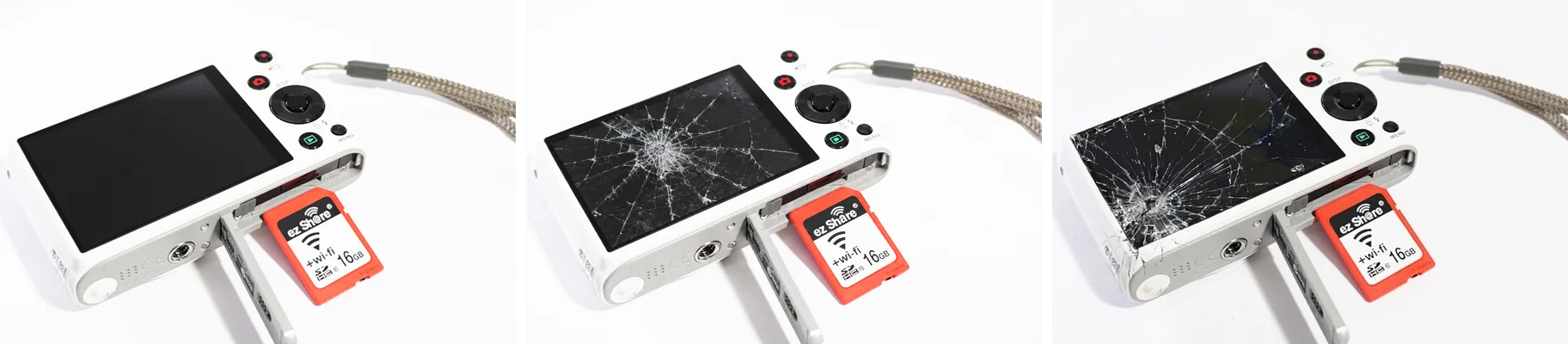
The real photo scored under 1%: authentic. Both edits were flagged:
- The ChatGPT edit, as downloaded: 96% AI probability. OpenAI's invisible watermark was found, and the file carried content credentials signed by OpenAI. Three independent signals agree.
- The Gemini edit, sent through a chat app: also 96%. This file had nothing left to read: the chat-app copy lost Google's watermark and the signed credentials. Our model caught it from the pixels alone.
That second case is the one that matters most. Watermarks and credentials are strong proof when they are there, but a screenshot, a re-save or a chat app often removes them. When they are gone, the model is the check that still has something to go on.
A dented toaster
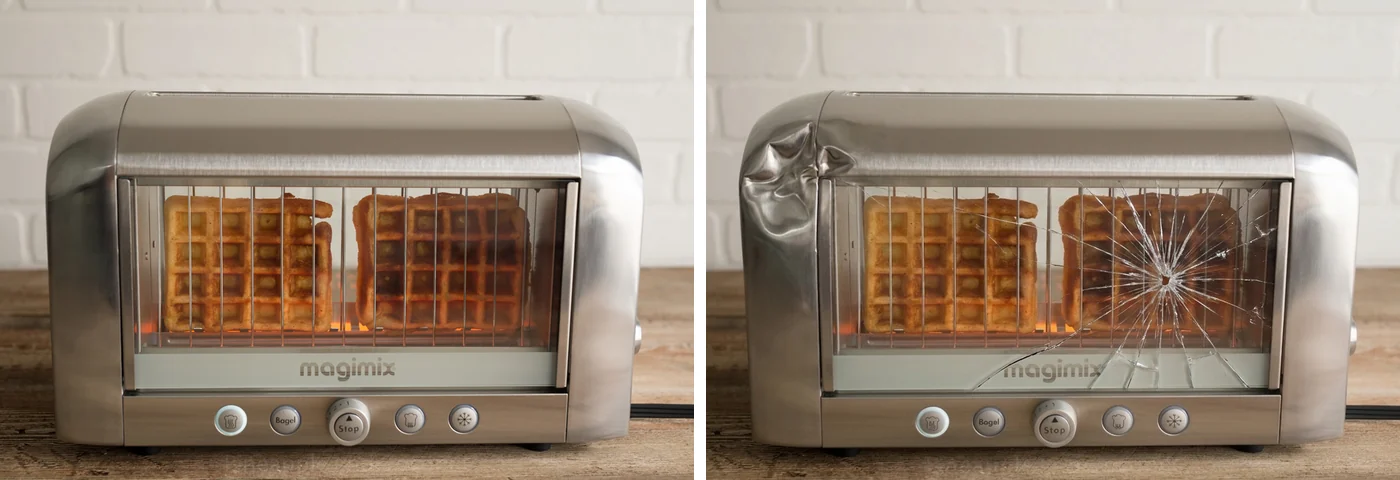
Gemini dented the top corner and cracked the glass window, and kept the waffles, the reflections and the brick wall exactly as they were. Straight from Gemini, the edit scored 96%, with Google's SynthID watermark found and content credentials signed by Google. The real photo scored under 1%.
A cracked lampshade, with nothing left to read
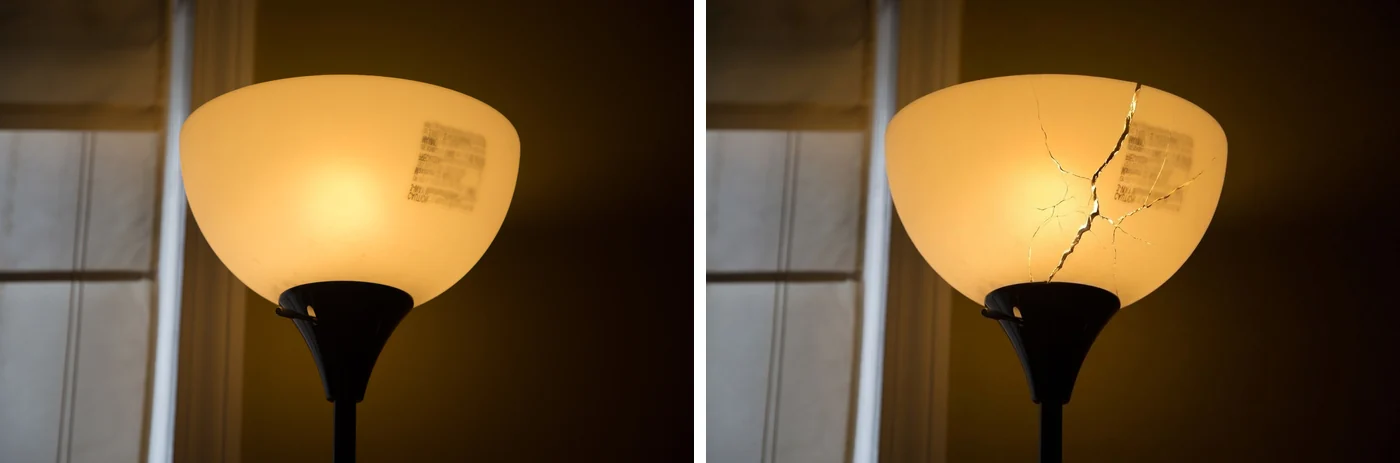
The edit here is a single crack across a glowing glass shade, a small part of the photo. We sent it through the chat-app treatment, which removed the watermark and the credentials. Our model still flagged it at 96%. The real photo scored under 1%.
A smashed clock
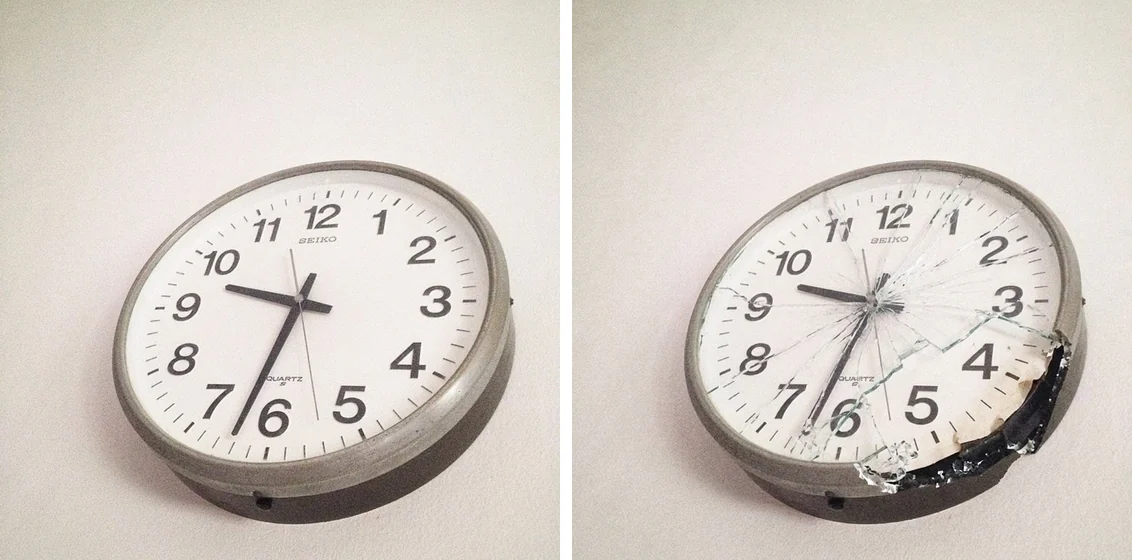
Gemini shattered the glass and broke a piece out of the case. As downloaded, the edit scored 94%, with SynthID found and credentials signed by Google. The real photo scored under 1%.
Real damage still passes
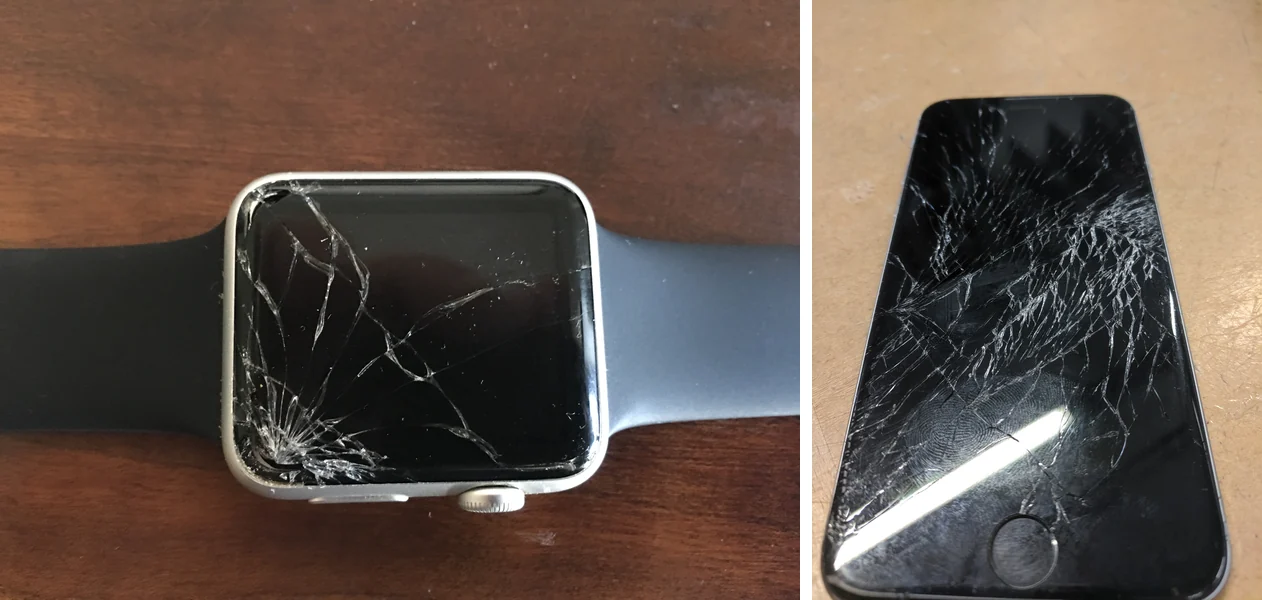
A detector that flags every broken screen is useless for claims, because most damage photos are real. These two are genuine photos of broken devices, taken with an iPhone and a Google Pixel. Both scored under 1% and came back authentic.
All results
| Photo | AI probability | Watermark | Content credentials | Verdict |
|---|---|---|---|---|
| Camera, real | under 1% | None | None | Authentic |
| Camera, ChatGPT edit, as downloaded | 96% | OpenAI, found | Signed by OpenAI | AI Generated |
| Camera, Gemini edit, via chat app | 96% | None left | None left | AI Generated |
| Toaster, real | under 1% | None | None | Authentic |
| Toaster, Gemini edit, as downloaded | 96% | Google SynthID, found | Signed by Google | AI Generated |
| Lamp, real | under 1% | None | None | Authentic |
| Lamp, Gemini edit, via chat app | 96% | None left | None left | AI Generated |
| Clock, real | under 1% | None | None | Authentic |
| Clock, Gemini edit, as downloaded | 94% | Google SynthID, found | Signed by Google | AI Generated |
| Apple Watch, real damage | under 1% | None | None | Authentic |
| iPhone, real damage | under 1% | None | None | Authentic |
Five edits flagged, six genuine photos passed. Eleven photos are a demonstration, not a benchmark, so here are the larger numbers.
On our benchmarks
On our frozen test sets, which the model never trained on, the new model:
- detects 98.1% of images from nine of the newest generators, including FLUX.2 max, Seedream 5 and Grok Imagine 2;
- detects 98.2% of AI-edited portraits made with three popular AI editors;
- wrongly flags 0.37% of about 62,000 real web images, roughly 1 in 270.
It isn't perfect, and we say where. Edits made with open-source editing models are harder for it than edits from the big commercial tools, and on some public sets of compressed web images it flags a few percent of genuine photos. The full results, including where it is weaker, are in our testing methodology.
Try it
Upload a damage photo in the dashboard to see the AI probability, watermark and content credentials side by side, or check photos as they arrive in your claims flow with the API.
Original photos: camera by Sinchen.Lin, toaster by Shanna S and wall clock by Syarief Hidayatullah, all CC BY 2.0, via Open Images; floor lamp from Dollar Street by Gapminder, CC BY-SA 4.0. All four were edited by Sightova with GPT Image 2.5 and Nano Banana 2; the edited lamp is shared under CC BY-SA 4.0. Broken Apple Watch by Dave Winer, CC BY-SA 2.0, and cracked iPhone by Ed6767, CC BY-SA 4.0, both via Wikimedia Commons, cropped.