Key takeaways
- Deepfake pornography is sexually explicit imagery made or altered with AI to show a real, identifiable person without their consent. It is a form of image-based sexual abuse.
- It is the largest category of deepfakes: 96% of deepfake videos found online in 2019 and 98% in 2023 were pornographic, and 99% of the people targeted were women.
- Celebrities were the first targets. "Nudify" apps and websites have since turned classmates, colleagues and former partners into targets too.
- Since 19 May 2026, US platforms must remove reported non-consensual intimate images, including AI-generated ones, within 48 hours under the TAKE IT DOWN Act. The UK and South Korea have criminalised it, and EU member states must do so by June 2027.
- Hash matching only catches copies of images already reported. Scoring every upload for explicit content and AI generation catches new images before anyone has to report them.
Contents
Definition
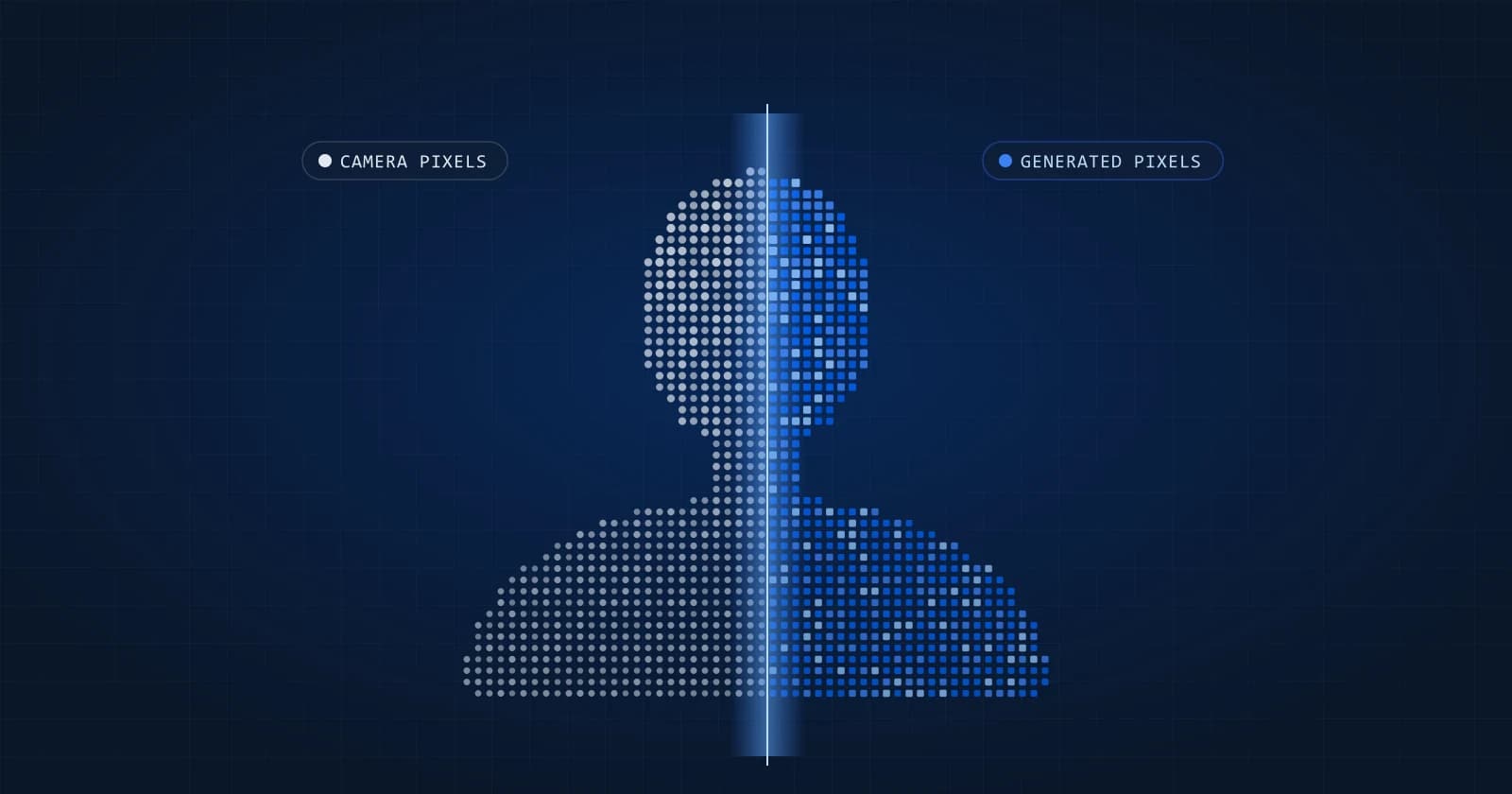
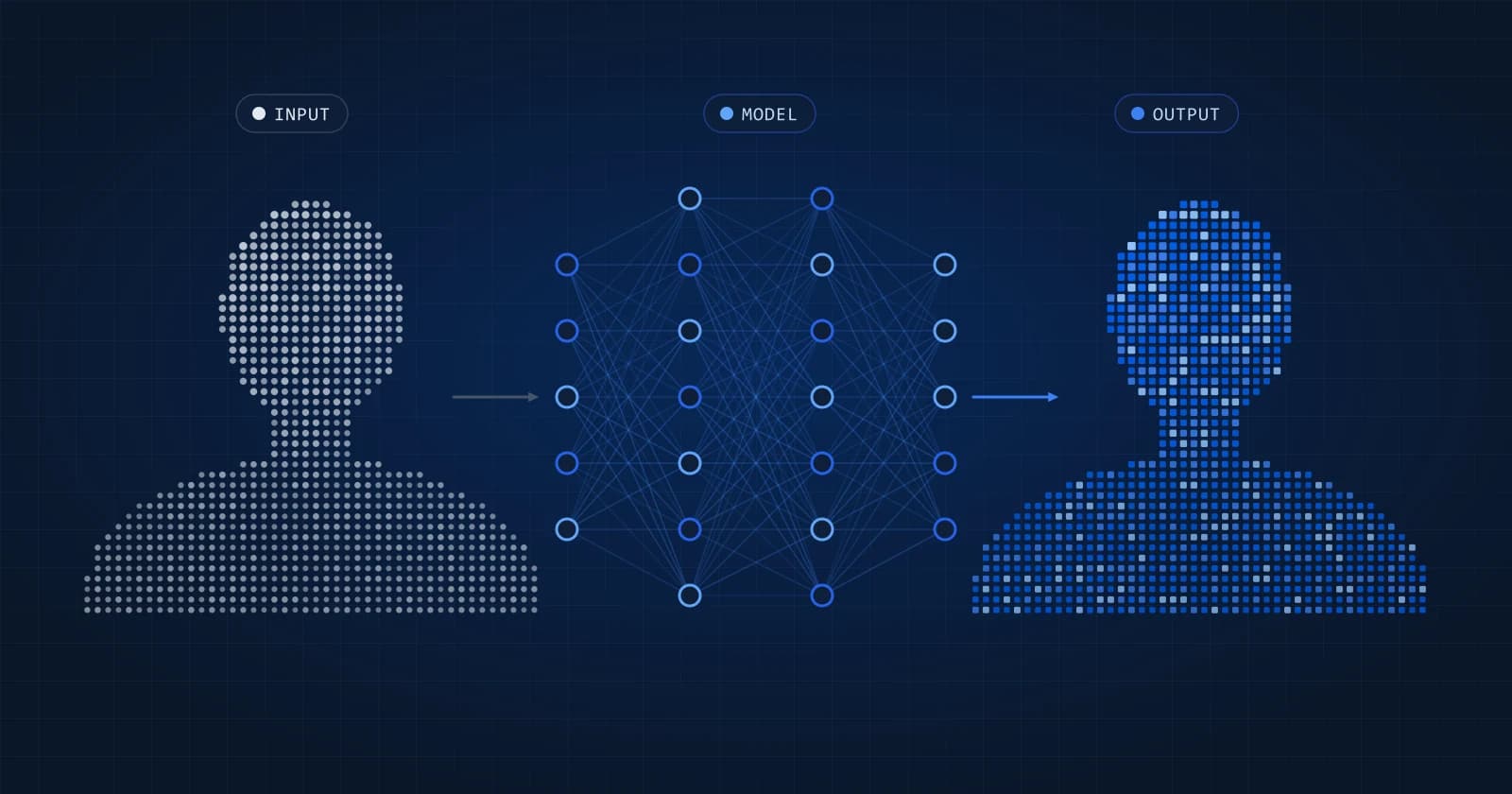
Deepfake pornography is sexually explicit imagery or video that uses AI to show a real person without their consent. The person's face is swapped onto another body, or an ordinary photo of them is altered to make them appear undressed, or the whole scene is generated in their likeness.
It goes by several names: non-consensual intimate deepfakes, sexually explicit deepfakes, synthetic intimate imagery and "nudification". Laws increasingly treat it as one form of non-consensual intimate image abuse, alongside the sharing of real intimate photos without consent.
Two things define it:
- A real, identifiable person. Explicit AI content of people who do not exist raises other questions, but this harm is about real people.
- No consent. The person shown did not agree to the image being made or shared.
The harm does not depend on whether anyone believes the image is real. A fake that everyone knows is fake still sexualises a real person without consent, and it can still be used to humiliate, harass or extort them.
How common it is
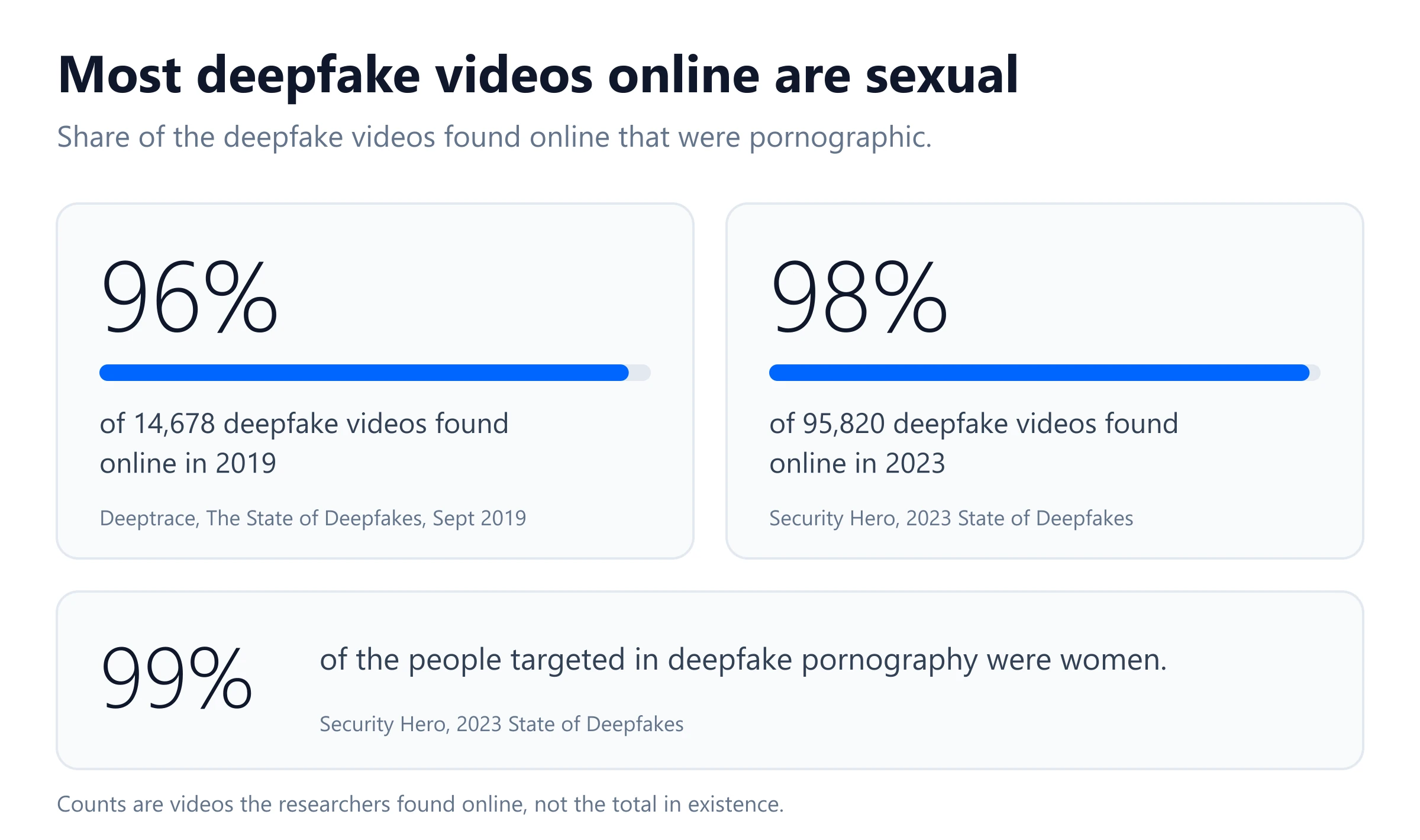
- In 2019, Deeptrace found 14,678 deepfake videos online, and 96% were pornographic. The four largest dedicated sites had more than 134 million video views.
- In 2023, Security Hero counted 95,820 deepfake videos online, a 550% increase on 2019. 98% were pornographic, and 99% of the people targeted were women.
- In 2024, the San Francisco City Attorney sued 16 websites that create non-consensual nude images. They had been visited more than 200 million times in the first six months of that year.
These counts are what researchers could find. Images shared in private groups and messaging apps are not in them.
Celebrity deepfake pornography
Celebrity deepfake porn is where the technique began. The term "deepfake" itself comes from a Reddit account that, in late 2017, posted pornographic videos with actresses' faces swapped in, as Motherboard reported at the time. Dedicated sites for celebrity deepfakes followed and drew the large audiences Deeptrace measured in 2019.
The case that reached the widest audience came in January 2024, when sexually explicit AI images of Taylor Swift spread on X. One post was reportedly viewed 47 million times before the account was suspended, and X temporarily blocked searches for her name. Lawmakers in Washington cited the case in calls for federal legislation.
Public figures are targeted because their faces are widely photographed and their names attract traffic. Actors, musicians, streamers, journalists and politicians are all affected. Fame does not reduce the harm, and it does not make the content legal.
Private individuals and "nudify" apps
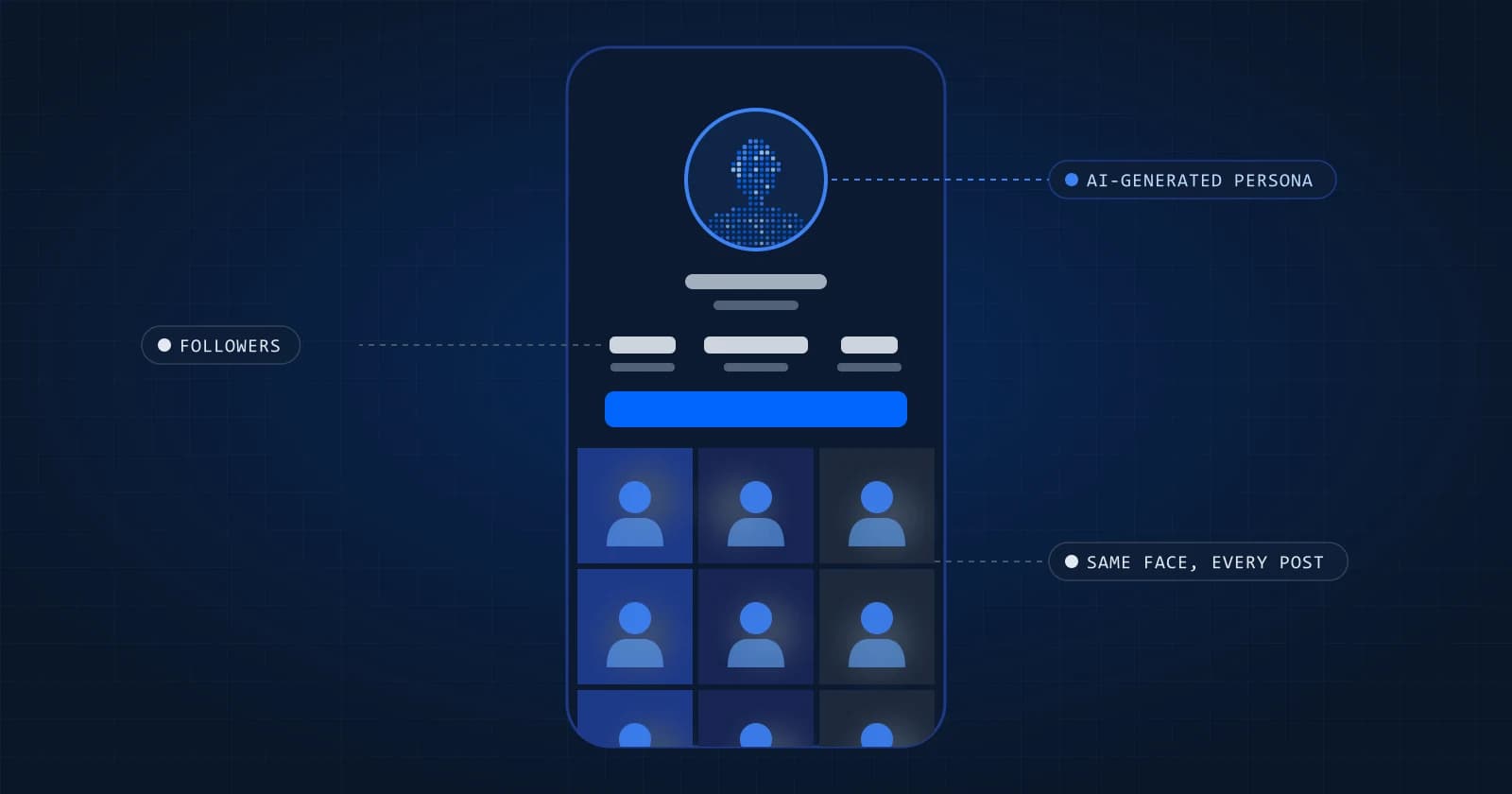
The bigger shift since 2023 is that anyone can be targeted. So-called nudify apps and websites take an ordinary clothed photo and produce a fake nude, with no technical skill needed. Victims are often classmates, colleagues, former partners or people the creator has never met.
- San Francisco. The City Attorney's 2024 lawsuit named 16 nudify websites. His office later reported that 10 of the most-visited sites had been shut down.
- Meta. In June 2025, Meta sued the maker of a nudify app for repeatedly running ads on Facebook and Instagram that broke its rules.
- South Korea. After a wave of sexual deepfakes targeting students and teachers in 2024, the National Assembly passed a law making it a crime to possess or view them.
- A mainstream chatbot. In January 2026, X's Grok produced sexualised edits of real people's photos on request. Ofcom opened a formal investigation under the Online Safety Act, the European Commission opened proceedings under the Digital Services Act, and X restricted the feature on 14 January.
AI-generated sexual imagery of anyone under 18 is child sexual abuse material and is illegal in most countries. It is reported through dedicated channels: NCMEC's CyberTipline in the US and the Internet Watch Foundation in the UK.
The harm to victims
The effects reported by victims and support services include:
- Harassment and humiliation. Images are sent to the victim's family, employer or school, or posted with their name.
- Extortion. Fake images are used to demand money or real intimate images, the pattern known as sextortion.
- Lasting search results. Copies spread across sites and reappear after removal. Many victims have to search for themselves repeatedly.
- Professional and personal damage. Victims lose work, withdraw from public life or change how they use social media.
Laws on deepfake pornography
United States: the TAKE IT DOWN Act
The TAKE IT DOWN Act was signed into law on 19 May 2025. It makes it a federal crime to knowingly publish non-consensual intimate images, including AI-generated "digital forgeries", or to threaten to do so. It also gave covered platforms one year to set up a removal process.
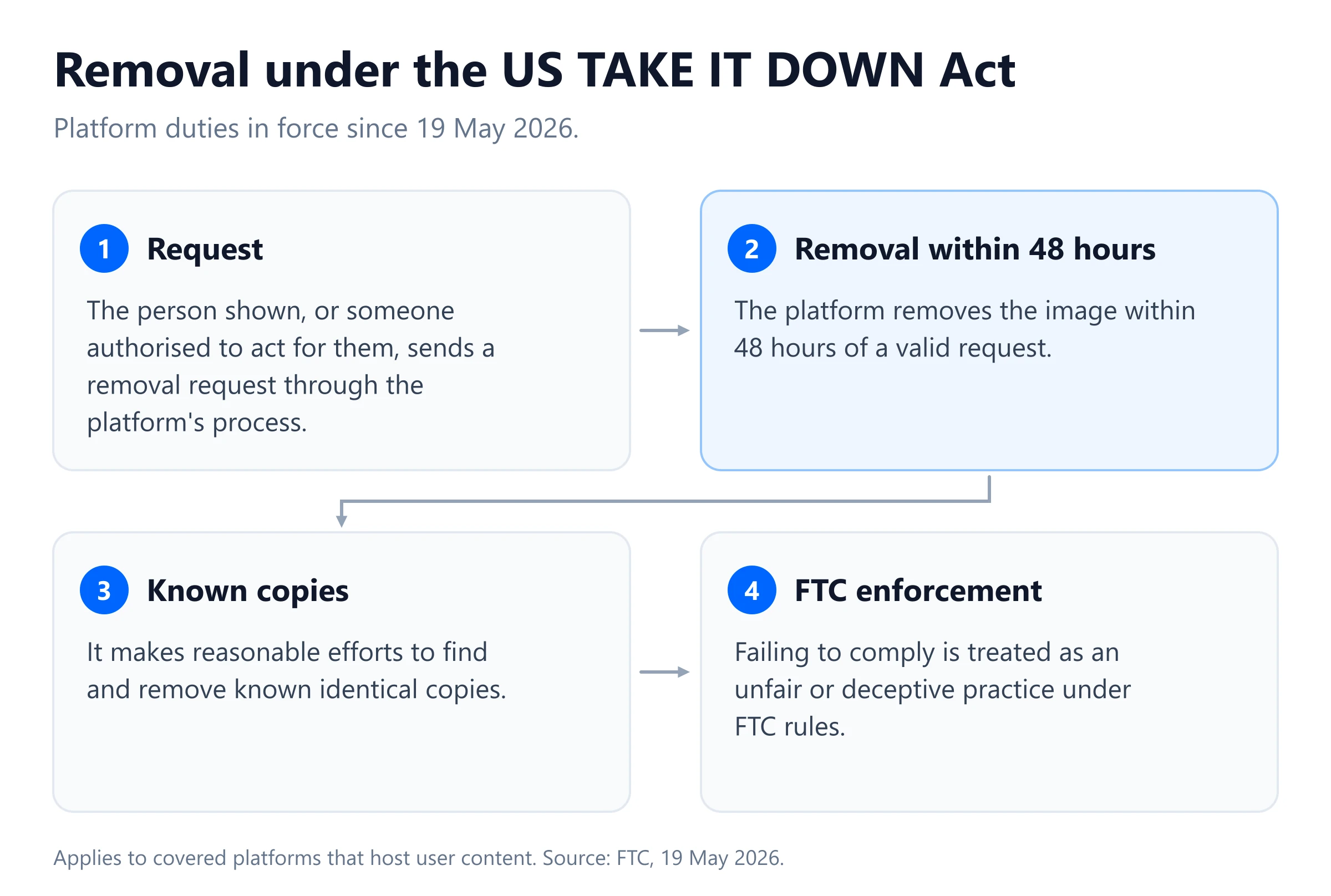
Those platform duties apply since 19 May 2026. On a valid request, a platform must remove the image and known identical copies within 48 hours. The FTC enforces the rule and runs TakeItDown.ftc.gov, where people can report platforms that do not act.
A second bill, the DEFIANCE Act, would let victims sue the people who make or knowingly share sexual deepfakes of them. The Senate passed it unanimously on 13 January 2026; it becomes law only if the House passes it too. Many US states have their own laws as well.
European Union
Directive (EU) 2024/1385 on combating violence against women requires member states to criminalise producing, manipulating or sharing intimate images of a person without consent, including deepfakes. Member states must transpose it by 14 June 2027.
Separately, Article 50 of the AI Act requires deepfakes to be disclosed as AI-generated from 2 August 2026. Disclosure does not make a non-consensual sexual deepfake lawful. Under the Digital Services Act, very large platforms must also assess and reduce the risk of this content spreading.
United Kingdom
Sharing, or threatening to share, an intimate image without consent became an offence under the Online Safety Act 2023. The offence covers images that appear to show a person, which includes deepfakes. Creating or requesting a sexually explicit deepfake of an adult without consent is an offence under the Data (Use and Access) Act 2025, in force since early 2026.
South Korea
Amendments passed in September 2024 punish possessing, buying, storing or viewing sexual deepfakes with up to three years in prison or a fine of up to 30 million won, and raised the maximum sentence for producing them to seven years.
This section is a summary, not legal advice.
How platforms detect and remove it
| Method | What it catches | What it misses |
|---|---|---|
| Reports and takedown requests | Images the victim or others find and report | Everything nobody has seen or reported yet |
| Hash matching | Re-uploads of an image that has already been reported | New images, and versions that have been cropped or edited |
| Explicit-content detection | Nudity and sexual content at upload | Whether the image is real or AI-generated |
| AI-generation detection | Synthetic and AI-edited images at upload | Who is shown, and whether they consented |
| Watermarks and content credentials | Images from AI tools that mark their output | Files whose metadata was stripped, and tools that add no marks |
Hash matching services such as StopNCII.org compute a fingerprint of an image on the victim's own device and share only that fingerprint with partner platforms, which can then find and remove matching uploads. It works well for re-uploads, but it needs a copy of the image to start from, and a new fake has a new fingerprint.
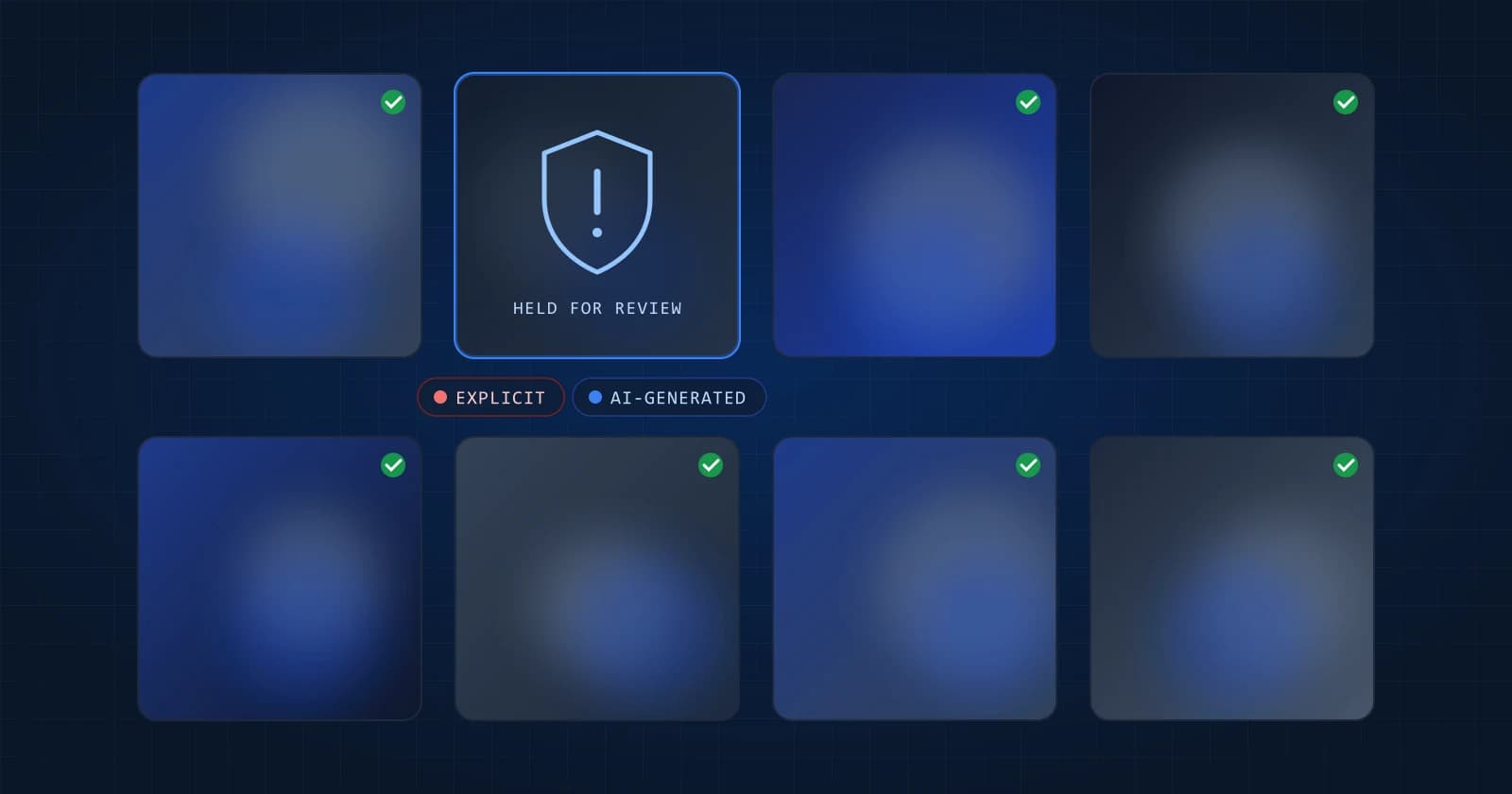
Detection at upload works the other way round. It scores every new image for explicit content and for AI generation, so an explicit image that is also AI-generated can be held for human review before it is published, without anyone having to report it first. Neither method identifies the person shown, so a human reviewer still decides what happens next.
How Sightova helps platforms screen uploads
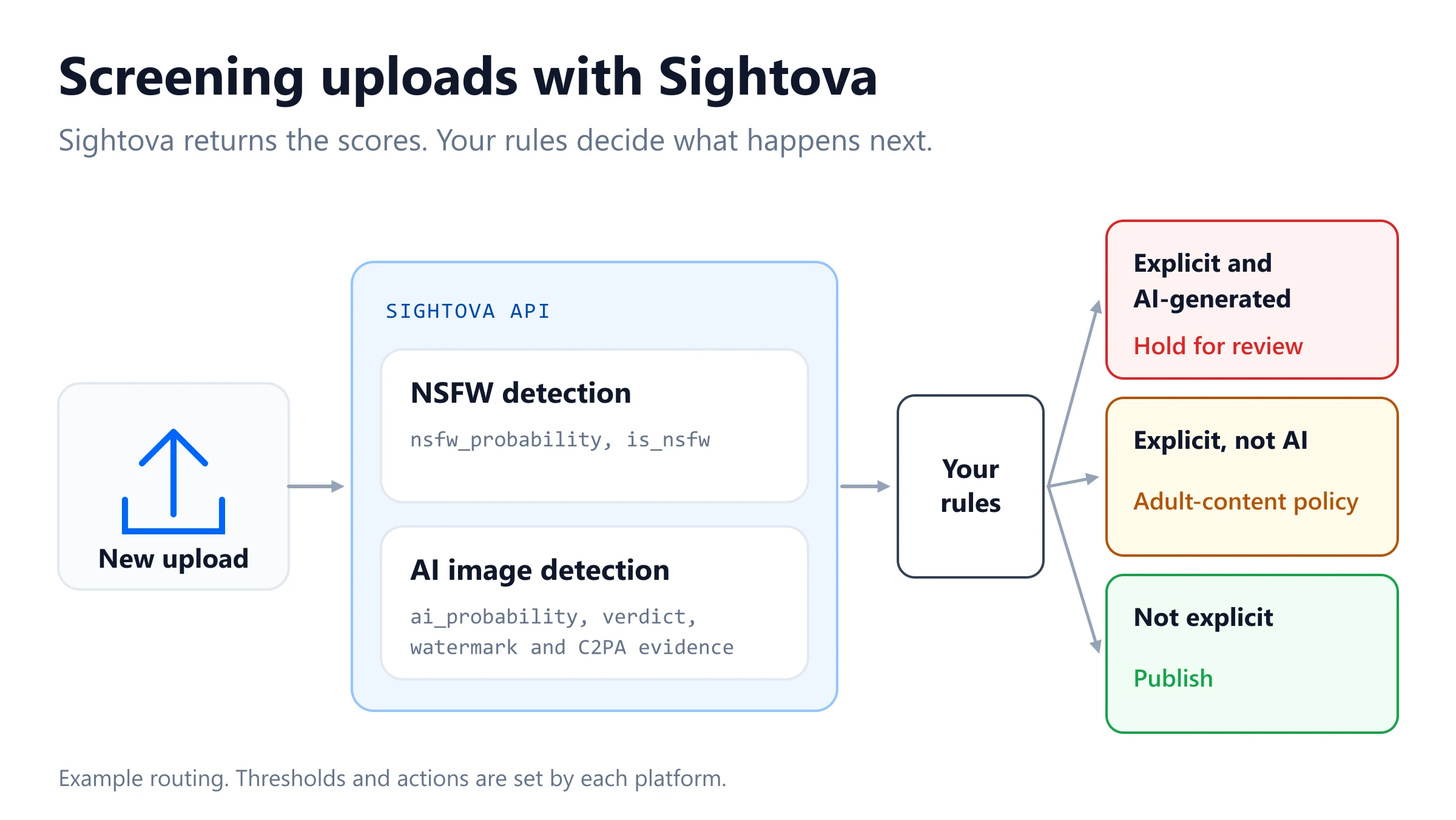
Sightova gives trust and safety teams the two scores this approach needs, through one REST API and a dashboard for reviewers:
- NSFW detection. Scores each image for explicit content and returns
nsfw_probabilityandis_nsfw. - AI image detection. Reads the pixels for traces of AI generation and editing and returns
ai_probabilityand a verdict. It also checks for Google SynthID and OpenAI watermarks and reads C2PA content credentials, which can name the tool that made the image. - Your thresholds, your rules. Each check returns scores in seconds. The platform decides which combinations are blocked, queued for review or published.
Dating apps, social platforms, forums, file-sharing services and any site that accepts user images can run both checks on every upload. See NSFW and violence detection, AI image detection and the API documentation.
If you are targeted
- Keep evidence. Save links, usernames and screenshots before you report, so the content can be traced after it is removed.
- Report to the platform. Under the TAKE IT DOWN Act, covered US platforms must act on a valid request within 48 hours. If they do not, report them at TakeItDown.ftc.gov.
- Block re-uploads. Adults can create hashes of images in their possession with StopNCII.org. For images of anyone under 18, use NCMEC's Take It Down service.
- Get support. In the UK, the Revenge Porn Helpline supports adults whose intimate images have been shared without consent.
- Contact the police. Creating or sharing sexual deepfakes is a crime in many countries.
Detect AI-generated images with Sightova
Scan in the dashboard or build it into your upload flow with the API.
Frequently asked questions
What is deepfake pornography?
Deepfake pornography is sexually explicit imagery or video that uses AI to show a real person without their consent, for example by swapping their face onto another body or altering an ordinary photo to make them appear undressed.
Is deepfake pornography illegal?
In many countries, yes. In the US, the TAKE IT DOWN Act makes it a federal crime to knowingly publish non-consensual intimate images, including AI-generated ones. The UK criminalises sharing and creating them, South Korea criminalises even possessing or viewing them, and EU member states must criminalise them by 14 June 2027.
What is celebrity deepfake porn?
Celebrity deepfake porn is sexually explicit AI imagery that uses a famous person's face or likeness without their consent. It is where deepfakes began in 2017, and it is subject to the same laws as deepfakes of private individuals.
What is a nudify app?
A nudify app is an app or website that uses AI to turn an ordinary clothed photo of a person into a fake nude image. Regulators and platforms are acting against them: San Francisco sued 16 such websites in 2024, and Meta sued the maker of one app in 2025.
How do I get a deepfake of me removed?
Save evidence, then report the image to the platform. Covered US platforms must remove valid reports within 48 hours under the TAKE IT DOWN Act, and you can report a platform that does not act at TakeItDown.ftc.gov. StopNCII.org (adults) and NCMEC's Take It Down (under 18s) help block re-uploads on partner platforms.
Can platforms detect deepfake pornography automatically?
Yes. Platforms can score every upload for explicit content and for AI generation, and hold images that are both for human review. Hash matching then blocks re-uploads of images that have already been reported. Sightova provides the explicit-content and AI-generation scores through one API.