Contents
Fake web shops have always needed pictures. For years that meant copying them: product shots lifted from a real brand's site, a model photo from someone else's catalogue, customer photos taken from another shop's reviews. That was also their weak point, because a reverse image search would often turn up the original.
Image generators remove that step. One tool can now produce a catalogue of products that have never been made, a lifestyle shot with a model who doesn't exist, and the "customer photos" that make the reviews look real. Every image is new, so a reverse image search has no original to find. We made such a set and ran it through Sightova.
A catalogue from a text prompt
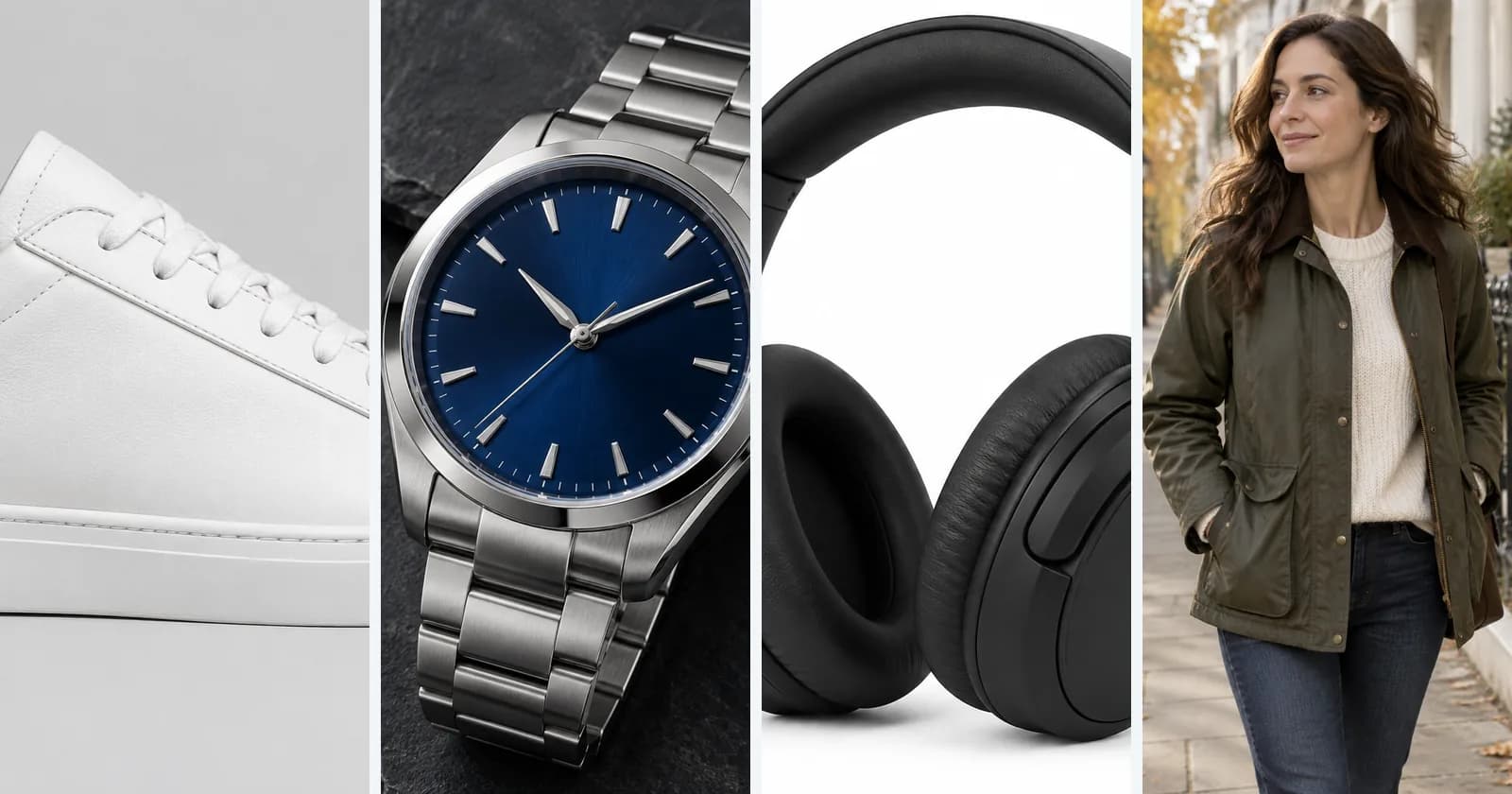
On 15 October 2026 we asked OpenAI's GPT-Image 2.5 for the images a small fake shop would need. Every product is unbranded, so no real company's goods or logos appear, and every person in these images is generated:
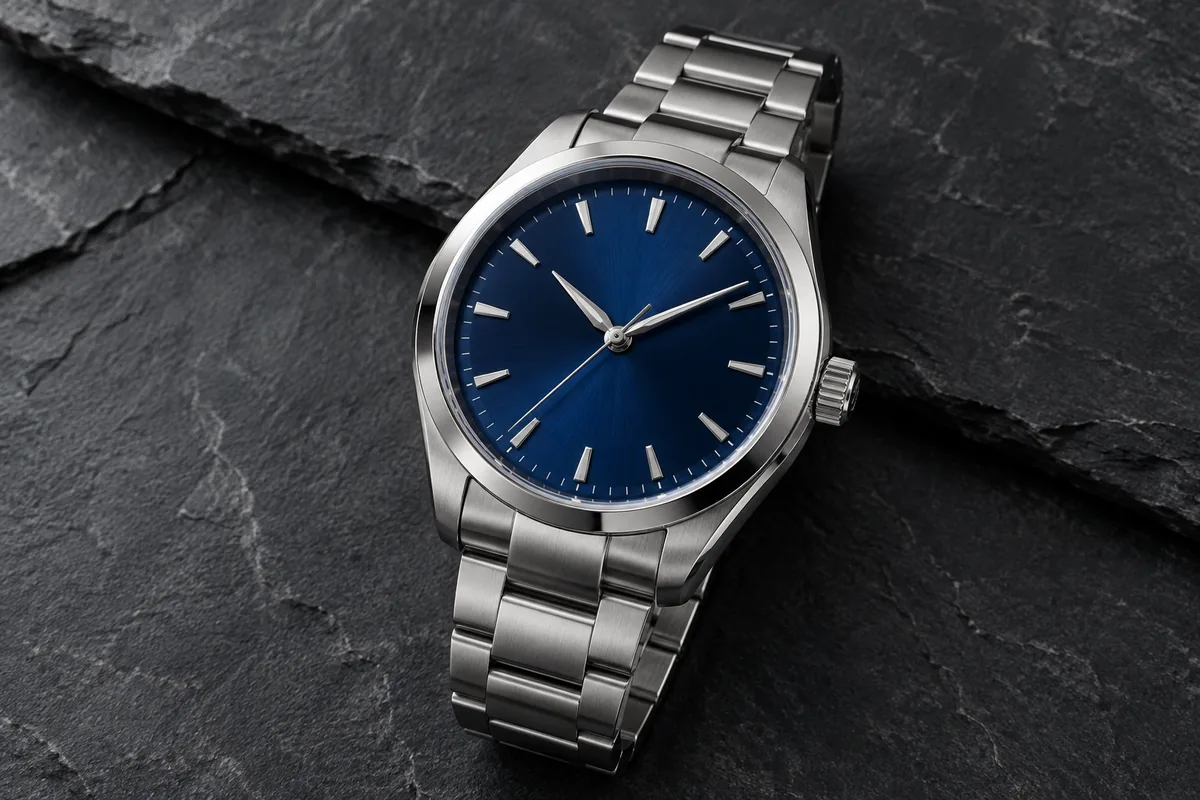
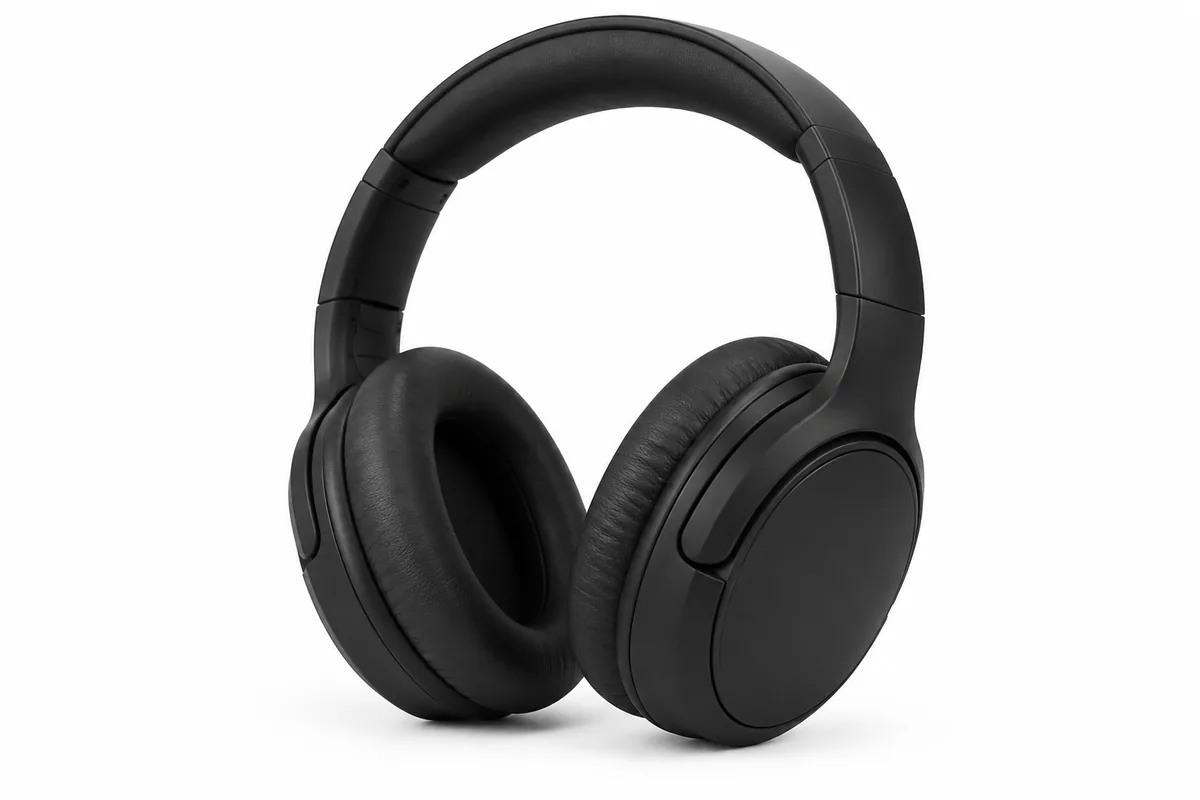
- Three catalogue shots: a white leather sneaker, a steel watch with a blue dial, and black over-ear headphones.
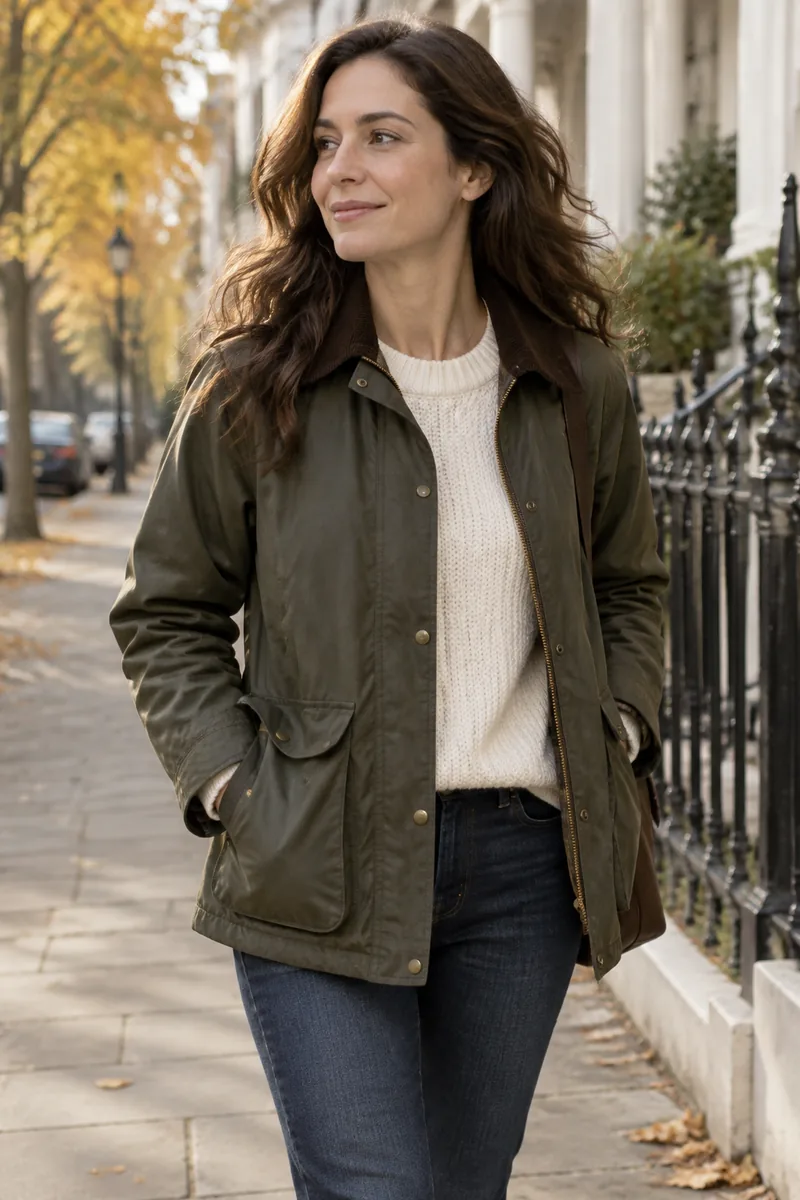
- One lifestyle photo: a woman in an olive jacket on an autumn street, the kind of image that sits at the top of a fashion shop's home page.
- One customer review photo: a hand holding the sneaker in a living room.
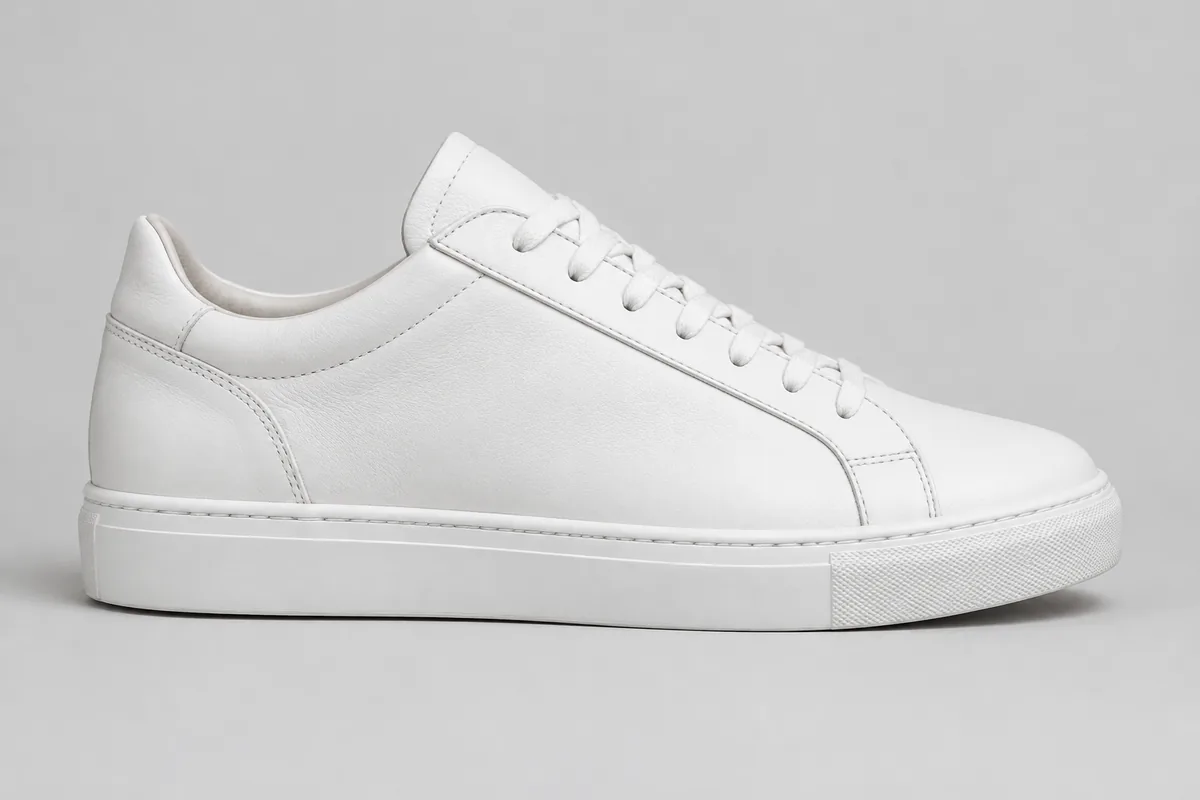
The catalogue shots look like studio work: even light, clean backgrounds, crisp stitching. Nothing in them hints that there is no product behind the picture.
The lifestyle photo matters as much as the products. A believable person wearing the goods makes a brand-new shop look established, and there is no model to credit, pay or trace.
What the scan returned
We scanned all five files, exactly as the generator returned them, with the checks every Sightova scan uses: the invisible watermark check (Google SynthID and OpenAI's watermark), content credentials (C2PA) and EXIF metadata, and our V3 synthetic-media model, which flags an image at 85% AI probability.
| Image | V3 AI probability | OpenAI watermark | Content credentials (C2PA) |
|---|---|---|---|
| Sneaker | 93.69% | 100% | Valid, signed by OpenAI |
| Watch | 95.15% | 100% | Valid, signed by OpenAI |
| Headphones | 95.59% | 100% | Valid, signed by OpenAI |
| Lifestyle model | 94.98% | 100% | Valid, signed by OpenAI |
| Customer review photo | 95.00% | 100% | Valid, signed by OpenAI |
All five were flagged as AI-generated, and on each one the three checks agreed. V3 scored every image between 93.7% and 95.6%, above the 85% line. The decoder found OpenAI's watermark at 100% confidence in all five, and every file carried a valid C2PA manifest signed by OpenAI. In the dashboard the verdict reason reads "OpenAI signed this image and declared it AI-generated." with a Verified by C2PA badge.
That matches our earlier test of GPT-Image 2.5 and Nano Banana Pro.
The review photo: fake social proof
For a fraudster, the most useful image in this set is the least polished one.
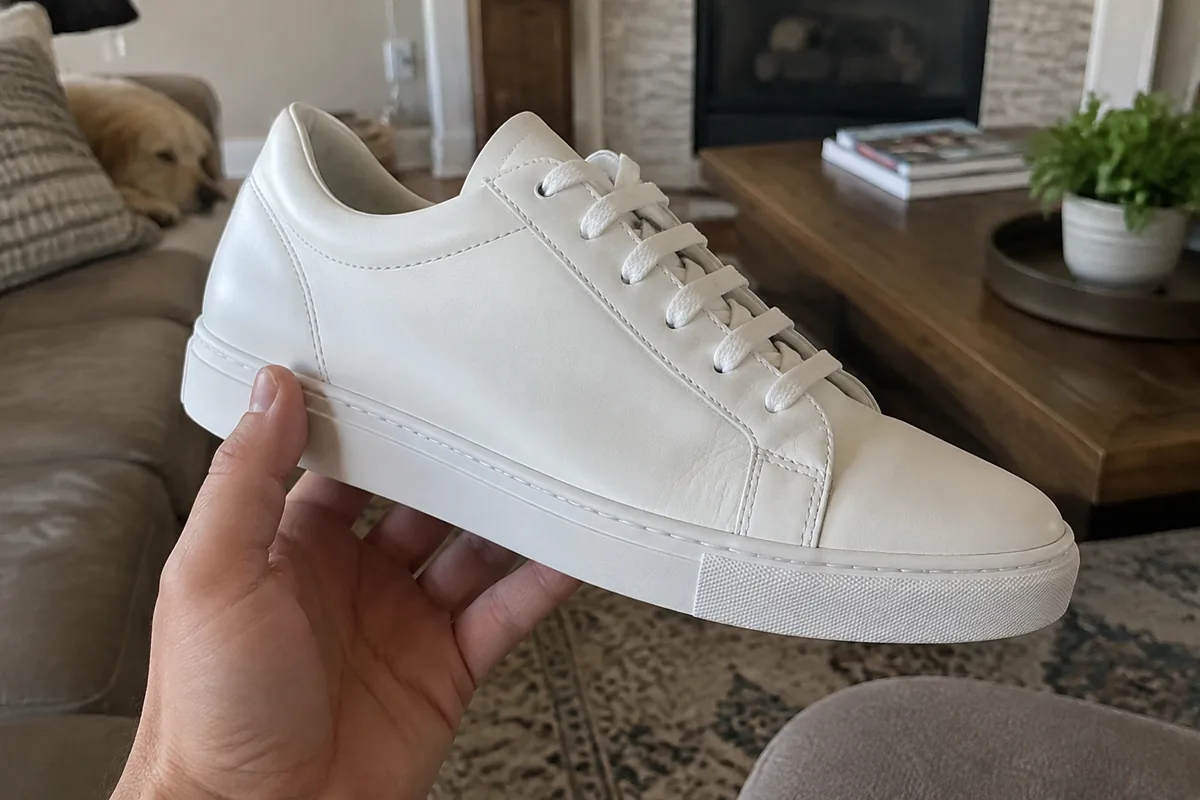
Shoppers have learned to distrust glossy product shots and to look for photos from real buyers instead: a little off-centre, taken at home, in ordinary light. This image copies exactly those cues. Attached to a glowing review, it says someone bought the shoe, received it and liked it. None of that happened.
Copied review photos can repeat across shops; generated ones can be different for every review and show the shop's own non-existent product. Wherever customers can attach photos to reviews, those uploads deserve the same check as listing photos. This one came back at 95.00%, with OpenAI's watermark and signed credentials.
Why every scan runs three checks
On these five files the evidence is as strong as it gets, because the watermark and the signed credentials name the maker. In real cases you often won't have them:
- Watermarks only exist when the tool adds one. OpenAI and Google do. Most open-source image models don't.
- Content credentials are fragile. Screenshots, re-saving and most messaging and social apps strip them. A shop that re-exports its images for the web may remove them without trying.
- The pixel model reads the image itself, so it doesn't depend on anything attached to the file. That is why V3 runs on every scan. On public benchmarks it detected 97.35% of images from nine of the newest generators and wrongly flagged 0.24% of 61,999 real web images; see our testing methodology.
The pixel model has limits too. Small AI edits inside real photos, such as a genuine product photo with one detail changed, are the hardest case for any pixel model, and the methodology reports this openly. A fully generated catalogue like this one is the easier case.
Who can check, and where
Marketplaces: at listing creation
The cheapest moment to catch a product that doesn't exist is before the listing goes live. Send each new listing photo through the API at upload, and route new sellers whose photos come back AI-generated to a reviewer rather than blocking them automatically. The call fits into an existing image content moderation pipeline; see how it applies to e-commerce.
An AI-generated product photo is not proof of fraud on its own; honest sellers use generated scenes for products they really stock. The flag gives a reviewer a reason to ask for what a real seller can provide easily: a phone photo of the item, proof of stock, or a supplier invoice.
Payment providers: at merchant onboarding
A fake shop needs a merchant account to take money. When a new merchant signs up, a sample of the product images on its site can go through the same checks. A shop whose catalogue, model shots and customer photos all come back AI-generated is a different risk from one that uses a single generated banner.
Social platforms and review sites
Fake shops are often promoted through ads, posts and emails rather than found through search. Social media and content moderation teams can check ad images and review photos with the same endpoint.
Shoppers
If a shop is new, the prices are low and every photo looks perfect, check before you pay. Run the photos through Sightova, or check them for Google's and OpenAI's invisible watermarks with the free SynthID decoder. If the offer came by email, the email scam detector labels AI-generated images in the emails you open. A clean result is not a guarantee, so the usual rules still apply: look for real company details and pay with a method that offers buyer protection.
Labeling AI product images
Some platforms allow AI product images as long as buyers can tell. Where that is the policy, the same scan supports it: images with a watermark or signed AI credentials can be labeled automatically, and images flagged only by the pixel model can go to a reviewer first. Honest sellers keep their images; shoppers know what they are looking at. See also AI content authentication.
Try it
Check product, listing and review photos yourself in the dashboard, or add the same three checks to your listing and review uploads with the API.